
Artichoke
|
Jerusalem Artichoke Plant |
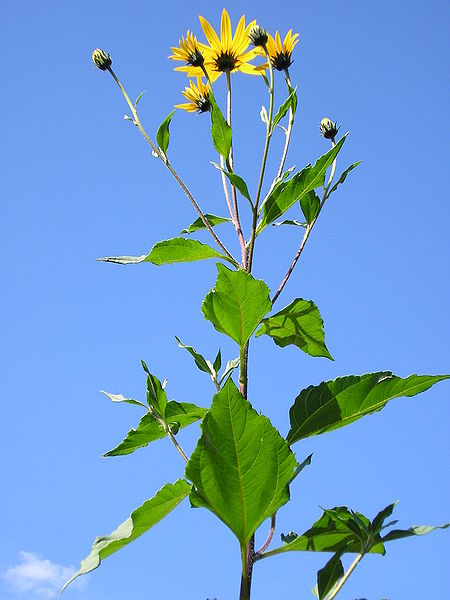
There is limited information available concerning the use of artichoke in pet foods, and the information that is available centers around its use as a source of dietary fiber and prebiotic material. Additionally the term “artichoke” when used as a pet food ingredient typically refers to the Jerusalem artichoke (Helianthus tuberosus), a species of sunflower native to eastern North America, and not bulbous green artichoke typically consumed by humans which is a perennial thistle originating in Southern Europe around the Mediterranean. Despite the name, the Jerusalem artichoke has no relation to Jerusalem, and it is not even a type of artichoke, though both are members of the daisy family.
In the pet food industry it is the tuberous root or storage root of the Jerusalem artichoke that is harvested, dried, and ground to a powder and then used as a food additive. Other plants harvested for their tuberous roots include the
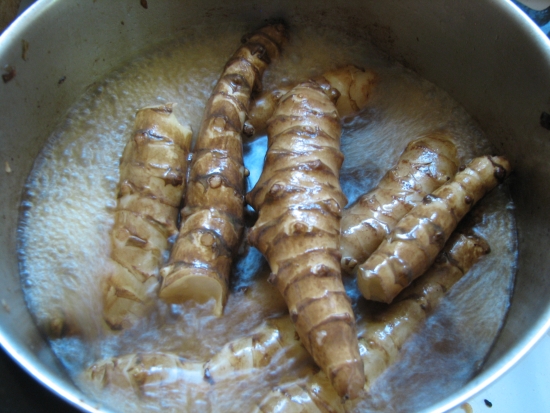 Jerusalem Artichoke Tuber Jerusalem Artichoke Tuber |
sweet potato, cassava, yam and dahlia. Unlike most tubers, but in common with other members of the daisy, or sunflower family (including the artichoke), the tubers of the Jerusalem Artichoke store the carbohydrate inulin (not to be confused with insulin) instead of starch. For this reason, Jerusalem artichoke tubers are an important source of inulin used as a dietary fiber in pet food manufacturing.
The plants prebiotic benefits center around the inulin or prebiotic soluble fiber produced by the tubers. Prebiotics now being widely accepted as non-digestible ingredients that benefit the host by selectively stimulating the growth or activity of one or a limited number of bacteria (commonly considered probiotics) that help maintain the natural balance of organisms (microflora) in the intestines. To put it simply the belief is that prebiotics stimulate the growth of probiotic bacteria which then compete against and reduce the growth of harmful bacteria in the digestive tract promoting an overall healthier digestive system. Ideally a prebiotic should beneficially alter the luminal or systemic aspects of the host’s defense system. Prebiotics that have been researched and used in both human foods and petfoods include inulin, fructo-oligosaccharide (FOS), oligofructose (short chain, or scFOS), galacto-oligosaccharide (GOS) and lactulose from sources such as garlic, onions, Jerusalem artichokes, chicory roots, sugar beets, milk (lactose) and bananas.